Autonomous Multi-Agent SDLC: A Better Shape for Agentic Engineering
I recently brainstormed with GPT. I wanted to share the chat Autonomous Multi-Agenten-SDLC Setup, which sketches a repository-centered operating model for software agents across the full delivery lifecycle. What makes it worth discussing is not a novel model trick, but the fact that it treats agentic engineering as a governed process with explicit artifacts, review points, and release evidence.
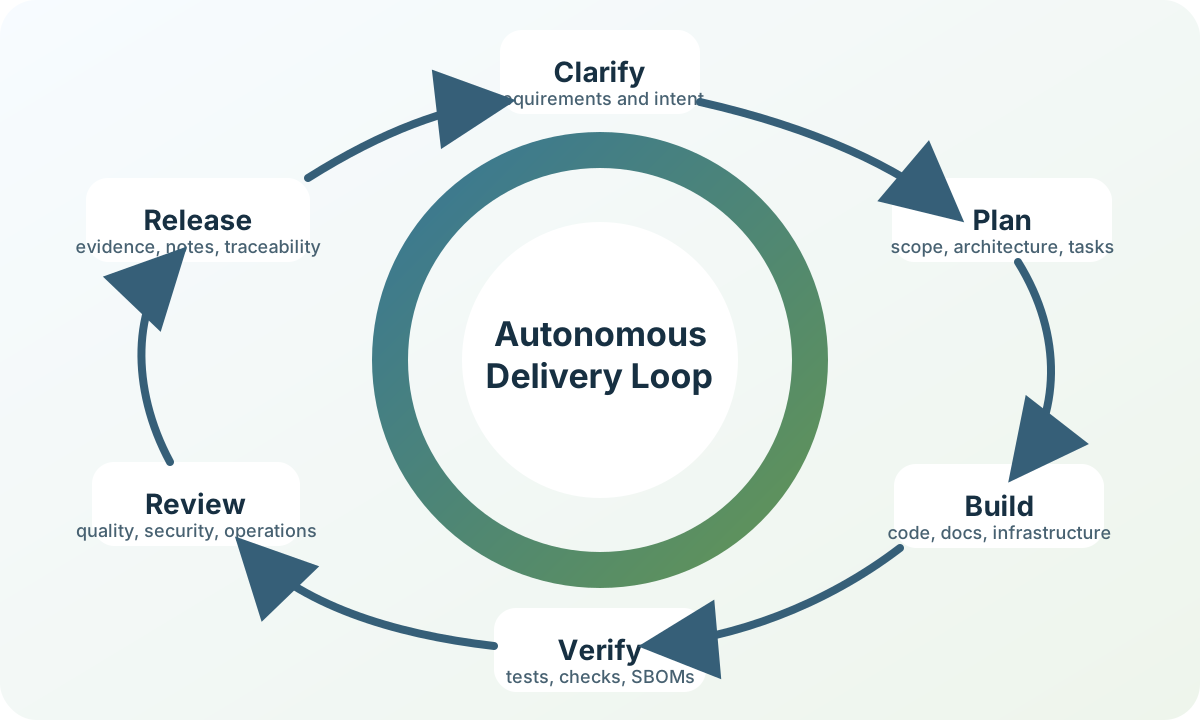
The most useful part of that autonomous multi-agent SDLC spec is its shape. It does not treat the agent as a clever coding companion that occasionally runs tests. It treats software delivery as a loop with named stages, named responsibilities, and named outputs, which is exactly the kind of structure agentic work needs once the novelty wears off and the real question becomes whether the system can be trusted over time.
The document describes a role-separated setup for feature work: clarify requirements, plan scope, update architecture, maintain tech specs, break work into tasks, implement, verify, review, check security and supply chain concerns, update documentation, and prepare release evidence. That list is long, but that is the point. Once an agent can move quickly, every missing step stops being a small omission and starts becoming a source of drift.
The strong idea: autonomy with traceability
One thing the spec gets right immediately is its operating mode. It allows aggressive autonomy, which means the system may change code, tests, documentation, CI/CD workflows, dependencies, infrastructure, and release tooling. That sounds dangerous until you read the companion rule: every high-impact change must be documented clearly in plans, specs, architecture notes, task logs, commits, release notes, and PR summaries.
That is the right bargain. Autonomy is only useful if the system can act. Autonomy is only safe if the system leaves evidence behind.
That framing lines up well with Addy Osmani's recent point that an agent is mostly harness, not model. This spec is almost entirely harness design. The interesting work is not hidden in the model selection. It is in the workflow, the repository structure, the review rules, and the requirement that important changes leave a durable trail.
The best rule: do not turn ambiguity into code
The clearest line in the document is also the most important one: no unstated product or architecture assumptions.
That single rule cuts straight through one of the most common agent failures. Agents do not usually break because they cannot write syntax. They break because vague intent gets converted into confident implementation. An unclear migration becomes a guessed migration. An unclear API becomes a guessed API. An unclear security expectation becomes a default nobody chose on purpose.
The spec handles that well. If the answer can be discovered from the repository, the system should inspect the repository and move on. If the uncertainty is about product behavior, business intent, or architecture, the system should stop and ask.
That division is simple and sharp. Be autonomous about facts. Be conservative about intent.
Separate roles help because they separate failure modes
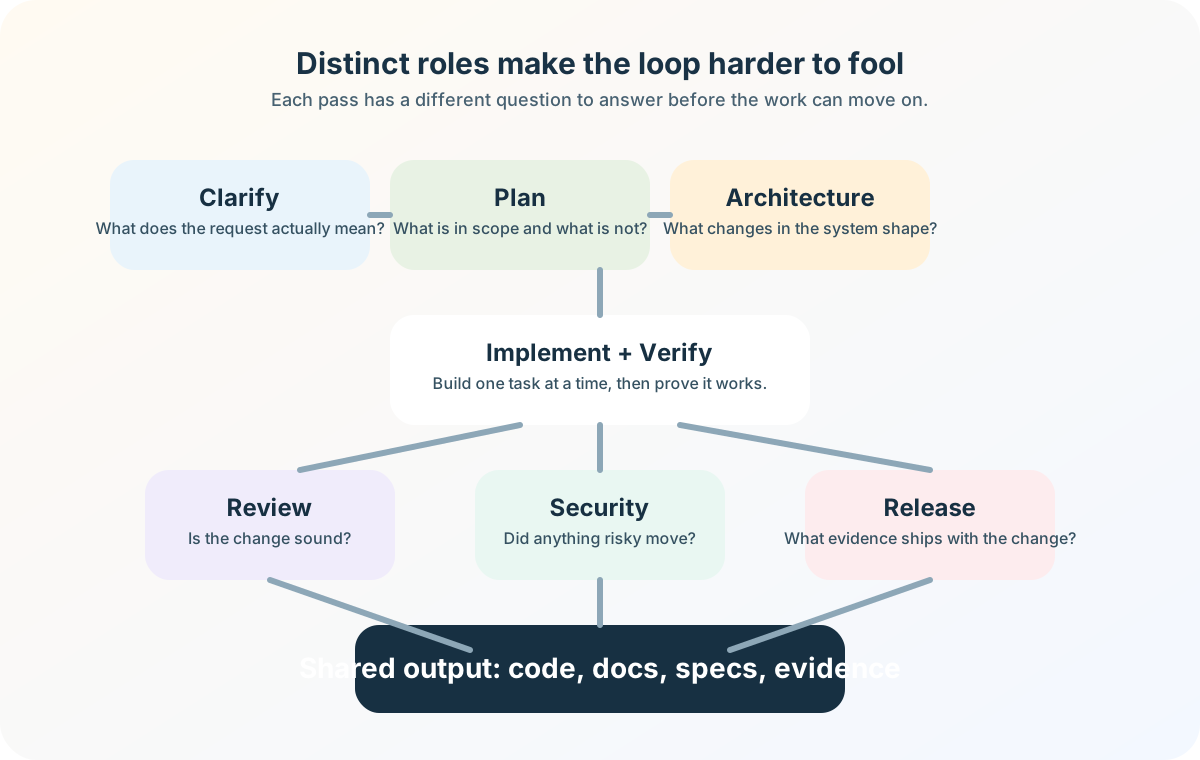
The spec defines a series of logical agents: requirements clarification, product planning, architecture, task planning, implementation, verification, code review, security, infrastructure, documentation, and release. I like that because it forces the workflow to acknowledge that these are different jobs even when the same underlying model performs them sequentially.
That matters for a practical reason: failure isolation. If implementation and review collapse into one step, review becomes weak by default. If architecture updates are optional, the codebase changes faster than the shared understanding. If security, SBOM generation, and release evidence are left until the end, they become whatever the team was too rushed to do properly.
The spec pushes in the opposite direction. Each role has a purpose, expected outputs, and a place in the sequence. That alone raises the quality bar because it forces the system to carry work across disciplines instead of acting as if code generation were the whole lifecycle.
The memory model is better than most agent setups
Another strong part of the document is where it puts durable knowledge. It wants the important state in versioned repository documentation:
docs/architecture/docs/tech-specs/docs/planning/docs/release/
The .agent/ directory is temporary scratch space only.
This is more important than it looks. A lot of agent workflows still rely on session memory, long prompts, or ad hoc notes that vanish with the run. That may work for one task. It does not scale into a stable engineering system.
Repository docs are slower, but they are inspectable, reviewable, linkable, and reusable by humans and future agents. If you want a team to benefit from what the agent learned, that knowledge has to survive the session.
Verification sits in the middle, where it belongs
The spec also reflects a broader shift in AI-assisted engineering: implementation gets cheaper, so specification and verification matter more.
Work is supposed to happen one task at a time. Tasks carry IDs, dependencies, files, acceptance criteria, verification steps, documentation expectations, and even target commit messages. Completed implementation should produce atomic conventional commits. After that comes focused checking, full verification, and then a review loop that covers code, architecture, tests, security, infrastructure, and CRA or supply chain concerns.
That is a better operating model than "generate a feature and see whether it seems fine." It turns the agent from a producer of candidate code into a participant in a governed loop.
The follow-up rule is also excellent. Any follow-up item must be completed now, tracked explicitly, or documented as intentionally deferred. That removes the silent pileup of half-decisions that makes automated work feel fast in the moment and expensive three weeks later.
Where the design still needs pressure
The spec is strong, but a few hard problems remain.
First, role separation on paper is not the same as independent judgment. If one model performs every role, the review passes can still inherit the same blind spots as the implementation pass. Structured separation helps, but teams should not confuse it with true independence.
Second, process can produce documents faster than it produces insight. An updated threat model is useful only if it is a good one. An architecture note counts for little if it merely paraphrases the code diff. The harness can enforce output, but quality still needs evaluation.
Third, the CRA-readiness section is careful in a good way. It asks for SBOMs, vulnerability evidence, traceability, and release artifacts, but it does not pretend that this equals legal compliance. That restraint is healthy. Engineering evidence is part of the picture, not the whole picture.
Why I think this matters
The value of this spec is that it moves the conversation up a level. Once agents are good enough to implement quickly, the main question is no longer whether they can write code. The question is whether the delivery loop around them is disciplined enough to keep code, architecture, security, documentation, and release evidence in sync.
That is why I found this document interesting. It does not offer magic. It offers structure. And right now, structure is probably the thing agentic engineering needs most.
Further reading
- Source spec: Autonomous Multi-Agenten-SDLC Setup
- Addy Osmani: The New Software Lifecycle